Begin of page section:
Page sections:

  • Go to contents (Accesskey 1)
  • Go to position marker (Accesskey 2)
  • Go to main navigation (Accesskey 3)
  • Go to sub navigation (Accesskey 4)
  • Go to additional information (Accesskey 5)
  • Go to page settings (user/language) (Accesskey 8)
  • Go to search (Accesskey 9)

End of this page section. Go to overview of page sections

Begin of page section:
Page settings:

English en
Deutsch de
Search
Login

End of this page section. Go to overview of page sections

Begin of page section:
Search:

Search for details about Uni Graz
Close

End of this page section. Go to overview of page sections


Search

Begin of page section:
Main navigation:

Page navigation:

  • University

    University
    • About the University
    • Organisation
    • Faculties
    • Library
    • Working at University of Graz
    • Campus
    Developing solutions for the world of tomorrow - that is our mission. Our students and our researchers take on the great challenges of society and carry the knowledge out.
  • Research Profile

    Research Profile
    • Our Expertise
    • Research Questions
    • Research Portal
    • Promoting Research
    • Research Transfer
    • Ethics in Research
    Scientific excellence and the courage to break new ground. Research at the University of Graz creates the foundations for making the future worth living.
  • Studies

    Studies
    • Prospective Students
    • Students
  • Community

    Community
    • International
    • Location
    • Research and Business
    • Alumni
    The University of Graz is a hub for international research and brings together scientists and business experts. Moreover, it fosters the exchange and cooperation in study and teaching.
  • Spotlight
Topics
  • Our digital Advent calendar
  • Sustainable University
  • Researchers answer
  • Work for us
Close menu

End of this page section. Go to overview of page sections

Begin of page section:
You are here:

University of Graz The 7th Faculty News Auf die Bäume
  • For scientists
  • For science enthusiasts
  • About the 7th Faculty
  • Accompanying research
  • Contact and team
  • News
  • Events

End of this page section. Go to overview of page sections

Wednesday, 20 May 2020

Auf die Bäume

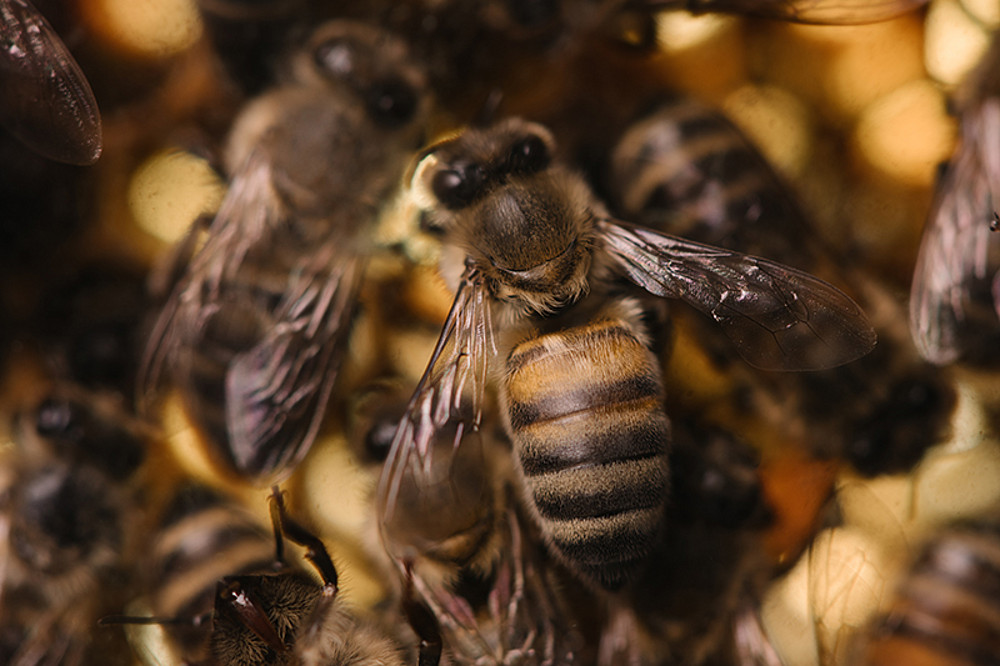
Heute ist Welttag der Biene: Die Universität Graz forscht die Insekten und ihre Umweltbedingungen das ganze Jahr über. Foto: Uni Graz/Kernasenko

Heute ist Welttag der Biene: Die Universität Graz forscht die Insekten und ihre Umweltbedingungen das ganze Jahr über. Foto: Uni Graz/Kernasenko

Heute ist #WorldBeeDay – und der Wald ist momentan der wichtigste Pollenlieferant für die Honigproduzentinnen, zeigt eine Studie der Uni Graz.

Woher beziehen die Bienen ihre Nahrung? Dieser Frage sind Robert Brodschneider und seine KollegInnen am Institut für Biologie der Universität Graz nachgegangen. Das Ergebnis: Jetzt im Frühling sind die Bäume die wichtigsten Pollenlieferanten. Ab Juni werden dann vorwiegend krautige Pflanzen angeflogen. Die Studie „C.S.I. Pollen“ führten die BiologInnen gemeinsam mit ImkerInnen als „citizen scientists“ durch – also BürgerInnen, die wichtige Daten für die Wissenschaft liefern. Insgesamt wurden mehr als 1600 Pollenproben gesammelt und analysiert.
„Durchschnittlich fanden wir pro Messtermin zwischen 15 und 17 Pollentypen“, berichtet Brodschneider. Jeweils zu Beginn und Ende der Saison war die Vielfalt am geringsten. Rund die Hälfte des gesammelten Blütenstaubs stammte von einer einzigen Pflanzenart. „Das heißt, die Bienen können sich oftmals nicht so ausgewogen ernähren, wie es ihrer Gesundheit zuträglich wäre“, so der Biologe.
Die Studienergebnisse sind in den „Scientific Reports“ erschienen.

Die BienenforscherInnen der Universität Graz arbeiten in mehreren Bereichen mit (Hobby-)ImkerInnen als „citizen scientists“ zusammen, etwa im Nachfolgeprojekt INSIGNIA „oder in „Zukunft Biene“, in dem unter anderem die Wintersterblichkeit der Honigbienenvölker erhoben wird.
Die Gesundheit dieser wichtigen Bestäubungsinsekten steht auch in anderen Projekten im Mittelpunkt. So haben die WissenschafterInnen beispielsweise eine neue, schonende Methode zur Bekämpfung der Amerikanischen Faulbrut entwickelt.
Den Bienenstock der Zukunft, der die Tiere vor Umweltgefahren warnt und den ImkerInnen relevante Gesundheitsdaten übermittelt, entwickeln die ForscherInnen der Universität Graz im europaweiten Projekt Hiveopolis. Mehr dazu auch in der Unizeit


created by Dagmar Eklaude

Related news

Happy holidays and a wonderful New Year!

The 7th Faculty wishes you a Merry Christmas and a happy New Year. Here you will find an overview of the holiday opening hours of our Hands-on Labs and the university museums.

Extern Intern

From Dinosaurs to Democracy: Reading and Discussion at the Literaturhaus

On Tuesday evening, the Literaturhaus Graz hosted a reading and discussion of the book The Beauty and Elegance of the Austrian Federal Constitution. A Literary Commentary. The venue was filled to capacity, every seat taken, with an attentive and open atmosphere throughout the evening.

“Chemical Life”: University of Graz Christmas Chemistry Show Captivates Audience

Festive spirit met scientific fascination as this year’s edition of the Christmas chemistry show “Chemical Life” transformed the stage of the Schauspielhaus into a lively laboratory. School classes and numerous other guests enjoyed an evening of surprising experiments and vivid insights into the chemistry of everyday life.

Schüler:innen zwischen 10 und 14 Jahren Studierende/Student:innen Wissenschaftskommunikation

Science goes Social II: Recap of a successful workshop series

The lunchtime workshop series “Science goes Social II” brought together three different perspectives on science communication this year. From personal branding to social media strategies, researchers gained valuable insights into how they can make their work and their institutions more visible on social media. The series will continue in 2026.

Wissenschaftler:innen Digitales (Social Media) Workshops Wissenschaftskommunikation

Begin of page section:
Additional information:

University of Graz
Universitaetsplatz 3
8010 Graz
Austria
  • Contact
  • Web Editors
  • Moodle
  • UNIGRAZonline
  • Imprint
  • Data Protection Declaration
  • Accessibility Declaration
Weatherstation
Uni Graz

End of this page section. Go to overview of page sections

End of this page section. Go to overview of page sections

Begin of page section:

End of this page section. Go to overview of page sections