Begin of page section:
Page sections:

  • Go to contents (Accesskey 1)
  • Go to position marker (Accesskey 2)
  • Go to main navigation (Accesskey 3)
  • Go to sub navigation (Accesskey 4)
  • Go to additional information (Accesskey 5)
  • Go to page settings (user/language) (Accesskey 8)
  • Go to search (Accesskey 9)

End of this page section. Go to overview of page sections

Begin of page section:
Page settings:

English en
Deutsch de
Search
Login

End of this page section. Go to overview of page sections

Begin of page section:
Search:

Search for details about Uni Graz
Close

End of this page section. Go to overview of page sections


Search

Begin of page section:
Main navigation:

Page navigation:

  • University

    University
    • About the University
    • Organisation
    • Faculties
    • Library
    • Working at University of Graz
    • Campus
    Developing solutions for the world of tomorrow - that is our mission. Our students and our researchers take on the great challenges of society and carry the knowledge out.
  • Research Profile

    Research Profile
    • Our Expertise
    • Research Questions
    • Research Portal
    • Promoting Research
    • Research Transfer
    • Ethics in Research
    Scientific excellence and the courage to break new ground. Research at the University of Graz creates the foundations for making the future worth living.
  • Studies

    Studies
    • Prospective Students
    • Students
  • Community

    Community
    • International
    • Location
    • Research and Business
    • Alumni
    The University of Graz is a hub for international research and brings together scientists and business experts. Moreover, it fosters the exchange and cooperation in study and teaching.
  • Spotlight
Topics
  • Our digital Advent calendar
  • Sustainable University
  • Researchers answer
  • Work for us
Close menu

End of this page section. Go to overview of page sections

Begin of page section:
You are here:

University of Graz The 7th Faculty News Auslöschung des Gehirns
  • For scientists
  • For science enthusiasts
  • About the 7th Faculty
  • Accompanying research
  • Contact and team
  • News
  • Events

End of this page section. Go to overview of page sections

Thursday, 07 March 2013

Auslöschung des Gehirns
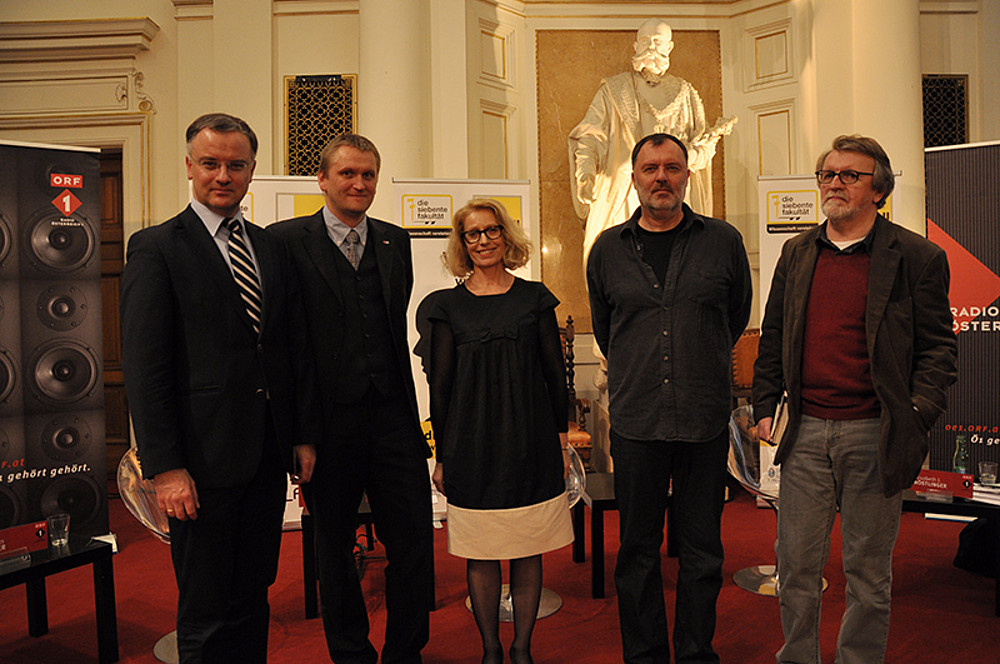
Am Podium: Müller, Müller-Putz, Nöstlinger, Leytner und Strasser (v. l.)
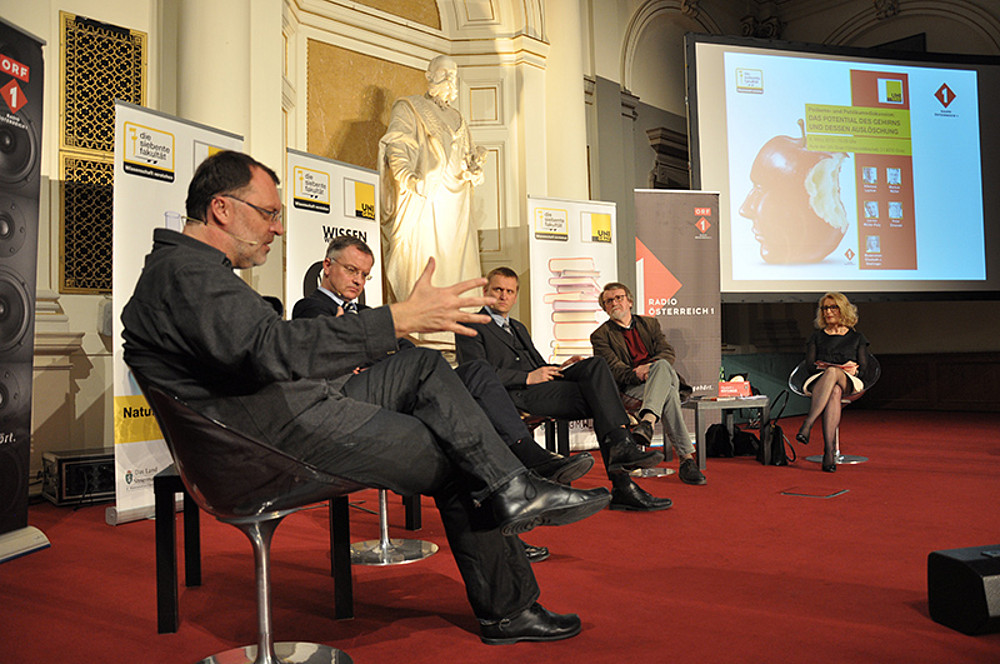
Am Podium: Müller, Müller-Putz, Nöstlinger, Leytner und Strasser (v. l.)

Unterschiedliche Blickwinkel zu Alzheimer und Demenz
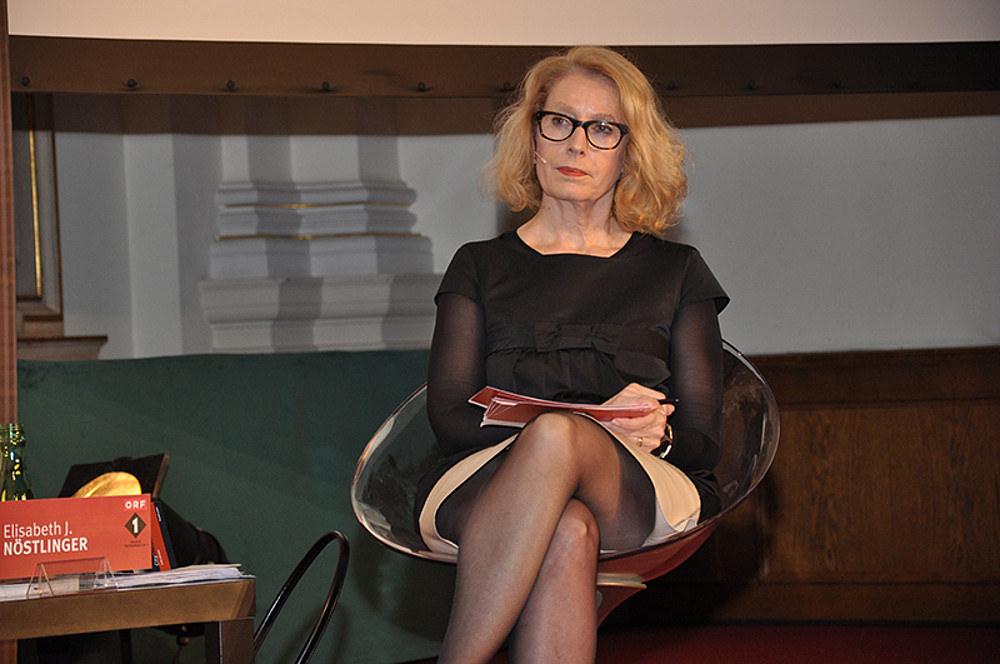
Unterschiedliche Blickwinkel zu Alzheimer und Demenz

Ö1-Wissenschaftsredakteurin Elisabeth J. Nöstlinger

Ö1-Wissenschaftsredakteurin Elisabeth J. Nöstlinger

Ö1-CityScienceTalk machte in der Aula Station

Ö1-CityScienceTalk machte in der Aula Station

Ö1-CityScienceTalk machte Station an der Uni Graz: Alzheimer und Demenz als neue Volkskrankheit

„Irgendwann werde ich nicht mehr wissen, wer du bist.“ Das sagt Ernst Lemden, gespielt von Klaus Maria Brandauer, im Fernsehfilm „Die Auslöschung“. Mit Ausschnitten aus dem jüngsten TV-Ereignis leitete Ö1-Wissenschaftsredakteurin Elisabeth J. Nöstlinger die Podiumsdiskussion „Das Potenzial des Gehirns und dessen Auslöschung“ am 6. März 2013 in der Aula der Karl-Franzens-Universitätm ein. „Derzeit leben etwa 100.000 ÖsterreicherInnen mit Demenz-Erkrankung, in 20 bis 30 Jahren wird sich diese Zahl verdoppeln. Wie werden sie leben?“ Eine Frage, die die hochkarätig besetzte Expertenrunde in der mit mehr 270 BesucherInnen vollgefüllten Aula intensiv beschäftigte.

Nikolaus Leytner, Regisseur und Drehbuchautor: Leytner hat sich für den genannten Film „Die Auslöschung“ intensiv mit Alzheimerkranken beschäftigt und gestand: „Natürlich sind auch persönliche Ängste vorhanden, das Gedächtnis zu verlieren.“  

Markus Müller, Medizinische Universität Wien: Der klinische Pharmakologe forscht unter anderem an einem Impfstoff, mit dem das Vergessen gestoppt werden soll. Allzu große Hoffnungen wollte er nicht wecken: „Erste Studien zeigen positive Ergebnisse, aber es ist noch zu früh, um Konkretes zu sagen.“

Gernot Müller-Putz, Leiter des Institutes for Knowledge Discovery, TU Graz: Der Forscher entwickelt im interdisziplinären und -universitären Team eine Hirn-Computer-Schnittstelle: „Mit Hilfe von Gedanken schaffen wir eine Überbrückung zwischen Gehirn und Gliedmaßen.“

Peter Strasser, Karl-Franzens-Universität Graz: Der Philosoph brachte die ethischen Werte in Debatte ein und reflektierte darüber, was den Menschen überhaupt ausmacht: „Es ist mehr als nur das Gehirn.“

Die Diskussion ist nachzuhören: am Mittwoch, 13. März 2013, um 21 Uhr im Rahmen des Salzburger Nachtstudio auf Ö1.


„Das Potenzial des Gehirns und dessen Auslöschung“ wurde in Kooperation der 7. fakultät, des Zentrums für Gesellschaft, Wissen und Kommunikation an der Uni Graz, der TU Graz und von Ö1-CityScienceTalk veranstaltet.

created by Andreas Schweiger

Related news

Happy holidays and a wonderful New Year!

The 7th Faculty wishes you a Merry Christmas and a happy New Year. Here you will find an overview of the holiday opening hours of our Hands-on Labs and the university museums.

Extern Intern

From Dinosaurs to Democracy: Reading and Discussion at the Literaturhaus

On Tuesday evening, the Literaturhaus Graz hosted a reading and discussion of the book The Beauty and Elegance of the Austrian Federal Constitution. A Literary Commentary. The venue was filled to capacity, every seat taken, with an attentive and open atmosphere throughout the evening.

“Chemical Life”: University of Graz Christmas Chemistry Show Captivates Audience

Festive spirit met scientific fascination as this year’s edition of the Christmas chemistry show “Chemical Life” transformed the stage of the Schauspielhaus into a lively laboratory. School classes and numerous other guests enjoyed an evening of surprising experiments and vivid insights into the chemistry of everyday life.

Schüler:innen zwischen 10 und 14 Jahren Studierende/Student:innen Wissenschaftskommunikation

Science goes Social II: Recap of a successful workshop series

The lunchtime workshop series “Science goes Social II” brought together three different perspectives on science communication this year. From personal branding to social media strategies, researchers gained valuable insights into how they can make their work and their institutions more visible on social media. The series will continue in 2026.

Wissenschaftler:innen Digitales (Social Media) Workshops Wissenschaftskommunikation

Begin of page section:
Additional information:

University of Graz
Universitaetsplatz 3
8010 Graz
Austria
  • Contact
  • Web Editors
  • Moodle
  • UNIGRAZonline
  • Imprint
  • Data Protection Declaration
  • Accessibility Declaration
Weatherstation
Uni Graz

End of this page section. Go to overview of page sections

End of this page section. Go to overview of page sections

Begin of page section:

End of this page section. Go to overview of page sections