Begin of page section:
Page sections:

  • Go to contents (Accesskey 1)
  • Go to position marker (Accesskey 2)
  • Go to main navigation (Accesskey 3)
  • Go to sub navigation (Accesskey 4)
  • Go to additional information (Accesskey 5)
  • Go to page settings (user/language) (Accesskey 8)
  • Go to search (Accesskey 9)

End of this page section. Go to overview of page sections

Begin of page section:
Page settings:

English en
Deutsch de
Search
Login

End of this page section. Go to overview of page sections

Begin of page section:
Search:

Search for details about Uni Graz
Close

End of this page section. Go to overview of page sections


Search

Begin of page section:
Main navigation:

Page navigation:

  • University

    University
    • About the University
    • Organisation
    • Faculties
    • Library
    • Working at University of Graz
    • Campus
    Developing solutions for the world of tomorrow - that is our mission. Our students and our researchers take on the great challenges of society and carry the knowledge out.
  • Research Profile

    Research Profile
    • Our Expertise
    • Research Questions
    • Research Portal
    • Promoting Research
    • Research Transfer
    • Ethics in Research
    Scientific excellence and the courage to break new ground. Research at the University of Graz creates the foundations for making the future worth living.
  • Studies

    Studies
    • Prospective Students
    • Students
  • Community

    Community
    • International
    • Location
    • Research and Business
    • Alumni
    The University of Graz is a hub for international research and brings together scientists and business experts. Moreover, it fosters the exchange and cooperation in study and teaching.
  • Spotlight
Topics
  • Our digital Advent calendar
  • Sustainable University
  • Researchers answer
  • Work for us
Close menu

End of this page section. Go to overview of page sections

Begin of page section:
You are here:

University of Graz The 7th Faculty News Popcorn and Science: Research Meets Film
  • For scientists
  • For science enthusiasts
  • About the 7th Faculty
  • Accompanying research
  • Contact and team
  • News
  • Events

End of this page section. Go to overview of page sections

Tuesday, 16 September 2025

Popcorn and Science: Research Meets Film

Wissenschaftler:innen Vorträge
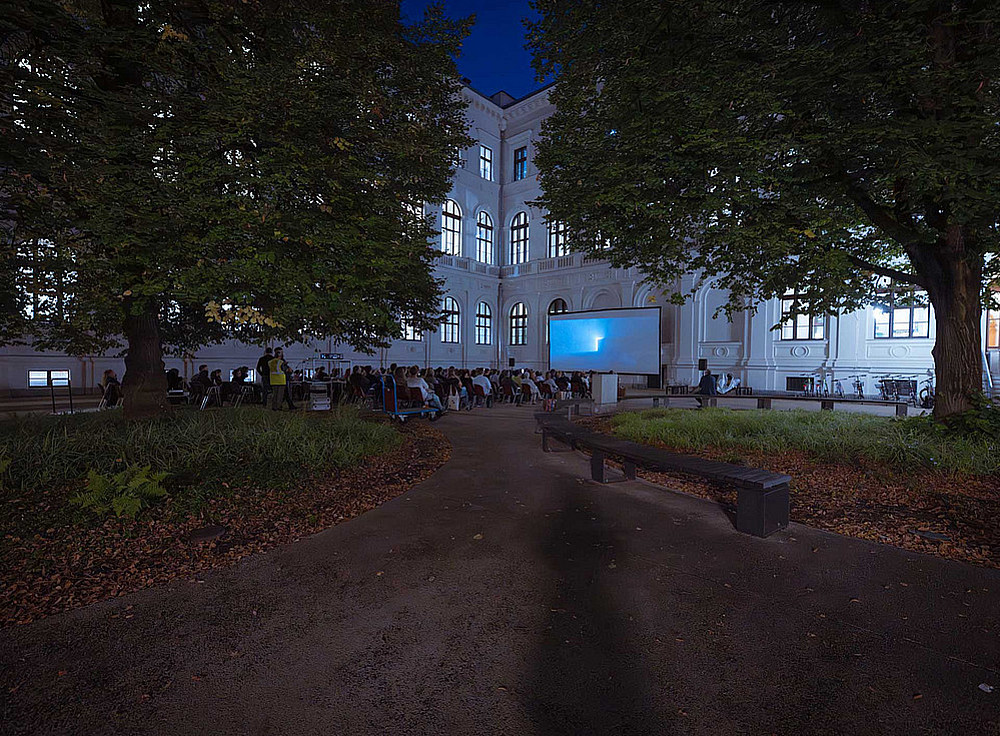
This year, for the first time, films were shown on late summer evenings in September in the courtyard of the main building. Photo: University of Graz/Angele

This year, for the first time, films were shown on late summer evenings in September in the courtyard of the main building. Photo: University of Graz/Angele

Film evenings with added value: In the second week of Campus Cinema, it wasn’t just big-screen productions that provided entertainment, but also exciting insights into research. Three scientists offered background information on the films in short “fact checks”. The format was moderated by Fritz Treiber – supported by the 7th Faculty, which once again made science accessible to a wide audience.

On 8 September 2025, theologians Michaela Sohn-Kronthaler and Bernd Hillebrand shed light on the award-winning film “Conclave”. The key question: Does a papal election really happen the way Ralph Fiennes, Stanley Tucci and Isabella Rossellini portray it in the film?

“You need people to look after the catering and ensure cleanliness, as well as doctors. Just like the cardinals, they also have to take an oath and pledge themselves to secrecy,” explained Sohn-Kronthaler and Hillebrand in the sold-out inner courtyard of the main building. “Many things in the course of the conclave are laid down in canon law. However, the use of black and white smoke is only a tradition and is therefore not prescribed.”

Religion and Entertainment

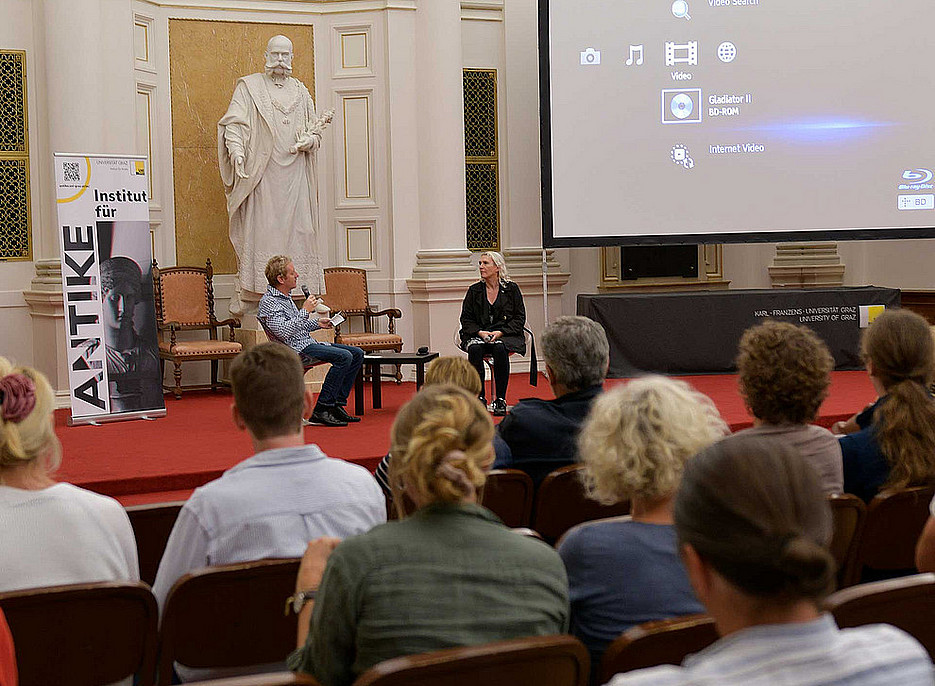
On 10 September, the planned cinema evening was moved to the auditorium due to rain – and “Gladiator II” transformed the room into an atmospheric cinema auditorium. Margit Linder from the Department of Classics explained the origins of gladiator fights: “The Etruscans were already organising such competitions in the 4th century BC as part of their funerary cult. Religion and entertainment always went hand in hand in antiquity.”

Even if Hollywood tells it differently: Roman gladiators were by no means in the arena every day. Linder: “The events were limited to a total of ten days a year. This meant that the chance of being killed was lower than is often assumed.”
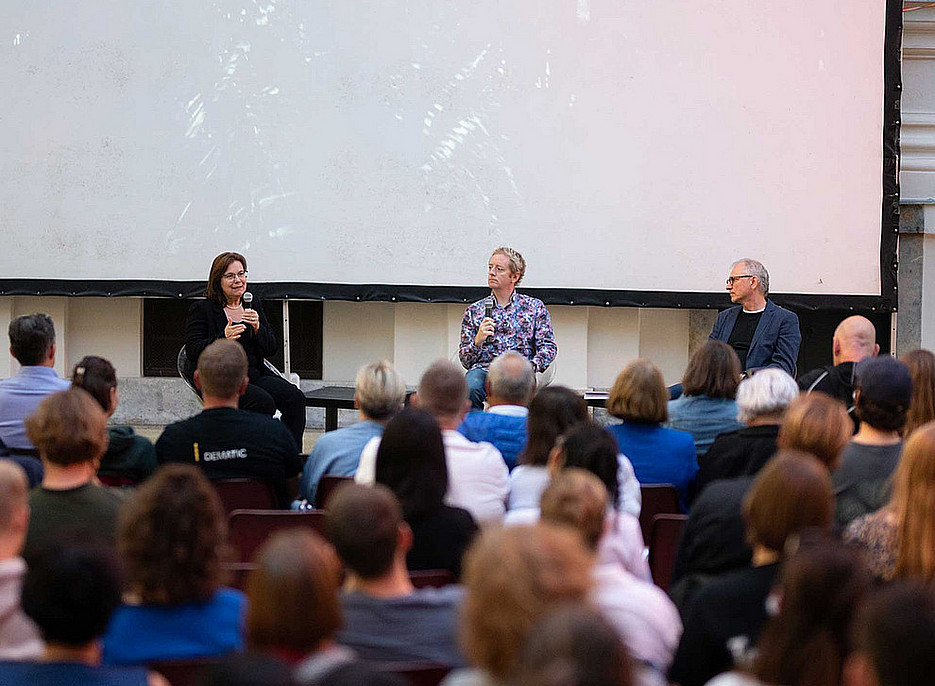
Michaela Sohn-Kronthaler, Fritz Treiber and Bernd Hillebrand (from left to right) shed light on the papal election in the film “Conclave”. Photo: University of Graz/Angele
Fritz Treiber and Margit Linder took a scientific look at gladiatorial combat in ancient times. Photo: University of Graz/Schweiger
created by The 7th Faculty

Related news

“Full STE(A)M Ahead for Teaching”: Open Lab Graz at the 4th Styrian STEM Forum

At this year’s Styrian STEM Forum in Judenburg, the Open Lab Graz once again presented itself with an information booth and engaged in conversations with numerous educators from across Styria.

Lehrer:innen Offenes Labor Wissenschaftskommunikation

Election Promises Under Review: Politikmonitor Presents Latest Assessment

At a press conference yesterday, political scientist Katrin Praprotnik and University of Graz Rector Peter Riedler presented the latest results of the Politics Monitor. The ongoing analysis shows how far the three-party coalition of the ÖVP, SPÖ and NEOS has come in implementing its election promises – and where progress is still lacking.

Demokratie Demokratieforschung

Heide Beranek-Knauer on Citizen Science in Science Communication

The online lecture by Heide Beranek-Knauer, organised by the University Library Graz, was met with great interest. The focus was on the use of citizen science in science communication.

Wissenschaftler:innen Offenes Labor Wissenschaftskommunikation

Focus on Science Communication: Second round of “SCIENCE GOES SOCIAL”

On 12 November, our training series “SCIENCE GOES SOCIAL: Your research in the new media” continued with an interactive workshop by Univ.-Prof. Dr. Helmut Jungwirth. At the centre of attention was the fundamental question of why science communication is necessary and meaningful – for research, for society and for researchers themselves.

Wissenschaftler:innen Workshops Wissenschaftskommunikation

Begin of page section:
Additional information:

University of Graz
Universitaetsplatz 3
8010 Graz
Austria
  • Contact
  • Web Editors
  • Moodle
  • UNIGRAZonline
  • Imprint
  • Data Protection Declaration
  • Accessibility Declaration
Weatherstation
Uni Graz

End of this page section. Go to overview of page sections

End of this page section. Go to overview of page sections

Begin of page section:

End of this page section. Go to overview of page sections