Begin of page section:
Page sections:

  • Go to contents (Accesskey 1)
  • Go to position marker (Accesskey 2)
  • Go to main navigation (Accesskey 3)
  • Go to sub navigation (Accesskey 4)
  • Go to additional information (Accesskey 5)
  • Go to page settings (user/language) (Accesskey 8)
  • Go to search (Accesskey 9)

End of this page section. Go to overview of page sections

Begin of page section:
Page settings:

English en
Deutsch de
Search
Login

End of this page section. Go to overview of page sections

Begin of page section:
Search:

Search for details about Uni Graz
Close

End of this page section. Go to overview of page sections


Search

Begin of page section:
Main navigation:

Page navigation:

  • University

    University
    • About the University
    • Organisation
    • Faculties
    • Library
    • Working at University of Graz
    • Campus
    Developing solutions for the world of tomorrow - that is our mission. Our students and our researchers take on the great challenges of society and carry the knowledge out.
  • Research Profile

    Research Profile
    • Our Expertise
    • Research Questions
    • Research Portal
    • Promoting Research
    • Research Transfer
    • Ethics in Research
    Scientific excellence and the courage to break new ground. Research at the University of Graz creates the foundations for making the future worth living.
  • Studies

    Studies
    • Prospective Students
    • Students
  • Community

    Community
    • International
    • Location
    • Research and Business
    • Alumni
    The University of Graz is a hub for international research and brings together scientists and business experts. Moreover, it fosters the exchange and cooperation in study and teaching.
  • Spotlight
Topics
  • Our digital Advent calendar
  • Sustainable University
  • Researchers answer
  • Work for us
Close menu

End of this page section. Go to overview of page sections

Begin of page section:
You are here:

University of Graz The 7th Faculty News Schräg und schlagfertig
  • For scientists
  • For science enthusiasts
  • About the 7th Faculty
  • Accompanying research
  • Contact and team
  • News
  • Events

End of this page section. Go to overview of page sections

Thursday, 30 March 2017

Schräg und schlagfertig

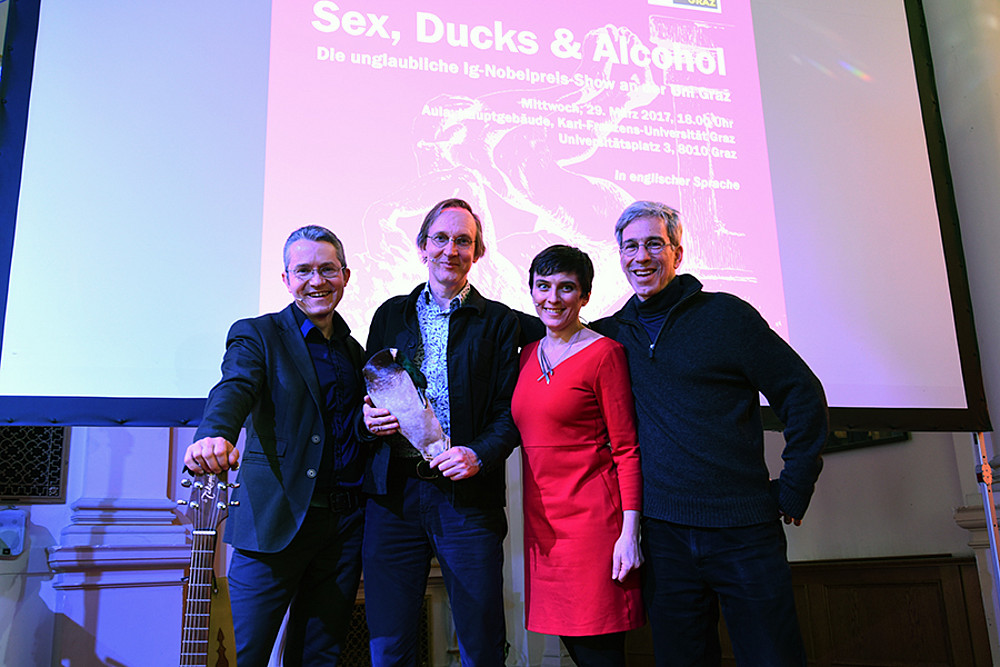
Wissenschaft mit Witz: Laurent Bègue, Kees Moeliker, Elisabeth Oberzaucher und Marc Abrahams (v.l.) Foto: Uni Graz/Schweiger

Wissenschaft mit Witz: Laurent Bègue, Kees Moeliker, Elisabeth Oberzaucher und Marc Abrahams (v.l.) Fotos: Uni Graz/Schweiger

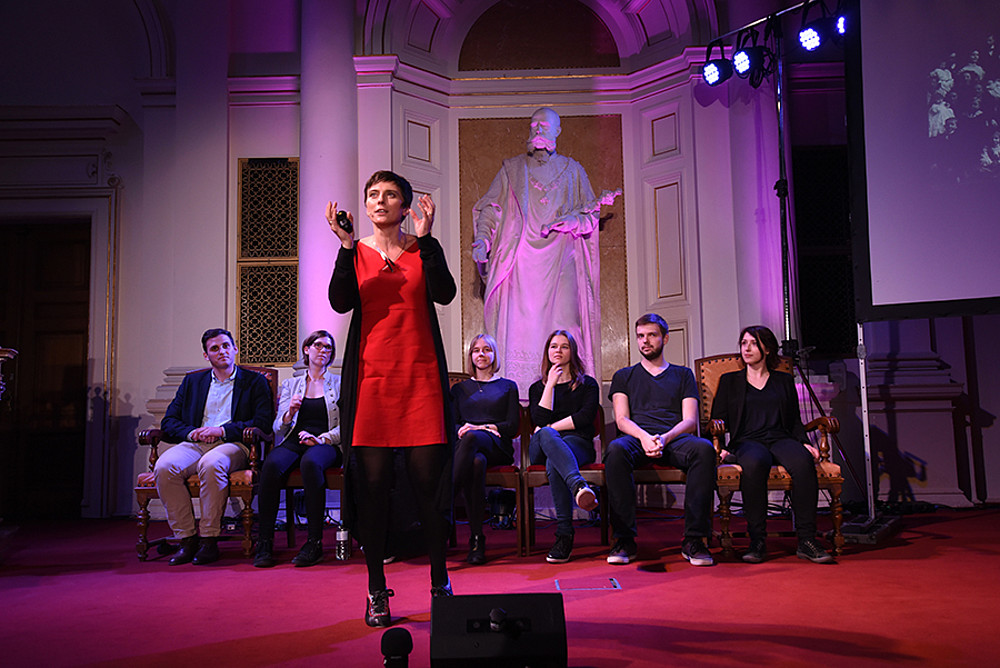
„Science Buster“ Elisabeth Oberzaucher erklärte, ob ein marokkanischer Herrscher in 30 Jahren tatsächlich 888 Kinder zeugen konnte.

„Science Buster“ Elisabeth Oberzaucher erklärte, ob ein marokkanischer Herrscher in 30 Jahren tatsächlich 888 Kinder zeugen konnte. Im Hintergrund der Studierenden-"Stoppuhr".

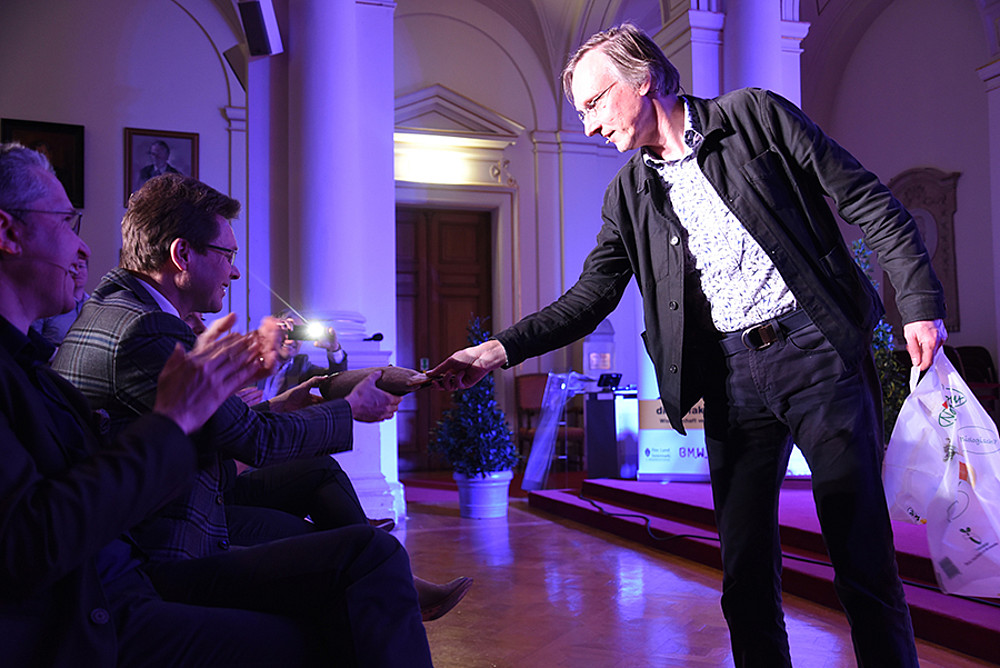
Forschung buchstäblich hautnah: Kees Moeliker schilderte den ersten Fall einer homosexuellen nekrophilen Ente.

Forschung buchstäblich hautnah: Kees Moeliker schilderte den ersten Fall einer homosexuellen nekrophilen Ente.

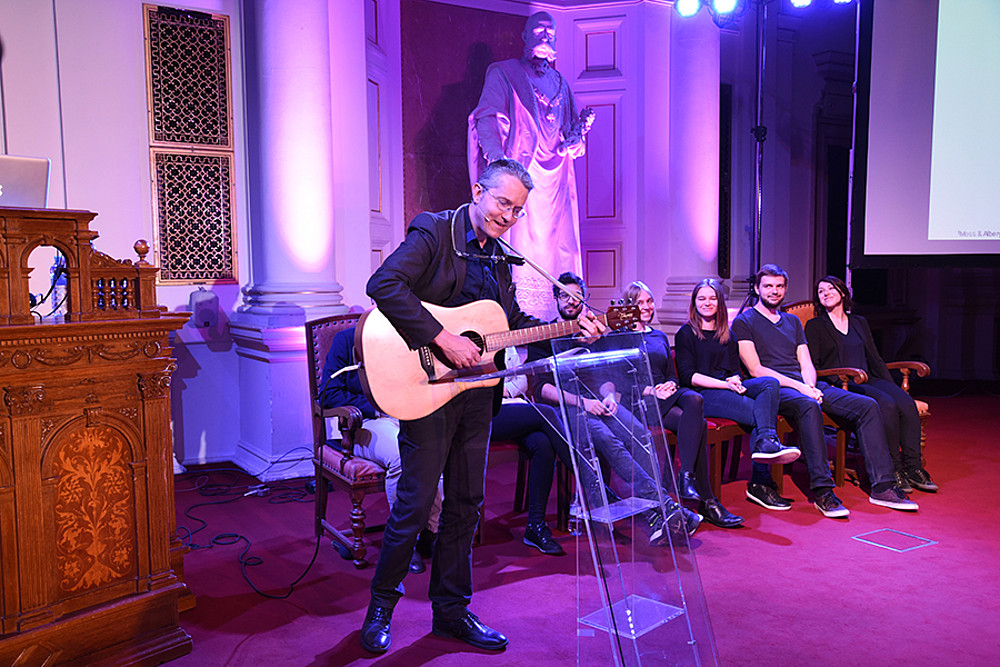
Laurent Bègue fasste seine Studie, dass alkoholisierte Menschen sich nachweislich für attraktiver halten, auch musikalisch zusammen.

Laurent Bègue fasste seine Studie, dass alkoholisierte Menschen sich nachweislich für attraktiver halten, auch musikalisch zusammen.

Die Show der Ig-Nobelpreis-GewinnerInnen begeisterte mit kurioser Forschung

Wissenschaft hat Witz: Das bewiesen drei GewinnerInnen des Ig-Nobelpreises am 29. März 2017 in der vollen Aula der Uni Graz. Die Award-Tour, die international für Begeisterungsstürme und ausverkaufte Säle sorgt, machte unter dem Titel „Sex, Ducks & Alcohol“ zum ersten Mal in Österreich Station.

Marc Abrahams warnte augenzwinkernd das Publikum vor „allergischen Reaktionen auf Fakten“ und präsentierte drei Ig-NobelpreisträgerInnen, die eindrucksvoll dem Motto des – an der Universität Harvard vergebenen – Preises folgten: „Die Menschen zuerst zum Lachen und dann zum Nachdenken bringen.“ Knackig sowohl das Thema als auch das 15-minütige Zeitlimit pro Vortrag, an das ein launiger Studierendenchor mit Ziegengemecker erinnerte.

„Science Buster“ Elisabeth Oberzaucher, Ig-Nobelpreis-Gewinnerin 2015, erklärte, ob ein marokkanischer Herrscher in 30 Jahren tatsächlich 888 Kinder zeugen konnte. Laurent Bègue, Ig-Nobelpreis-Gewinner 2013, belegte anhand eine Studie, dass alkoholisierte Menschen sich nachweislich für attraktiver halten.
Kees Moeliker, Ig-Nobelpreis-Gewinner 2003, schilderte den ersten Fall einer homosexuellen nekrophilen Ente.

Video: Die IG-Nobelpreis-Show 2017 an der Uni Graz

Der nächste Ig-Nobelpreis („ig“ steht für ignoble, also „unwürdig“) wird am 14. September 2017 an der Universität Harvard wiederum in zehn Kategorien vergeben. www.improbable.com

Die Veranstaltung fand im Rahmen der 7. fakultät, des Zentrums für Gesellschaft, Wissen und Kommunikation, statt.


created by Andreas Schweiger

Related news

Happy holidays and a wonderful New Year!

The 7th Faculty wishes you a Merry Christmas and a happy New Year. Here you will find an overview of the holiday opening hours of our Hands-on Labs and the university museums.

Extern Intern

From Dinosaurs to Democracy: Reading and Discussion at the Literaturhaus

On Tuesday evening, the Literaturhaus Graz hosted a reading and discussion of the book The Beauty and Elegance of the Austrian Federal Constitution. A Literary Commentary. The venue was filled to capacity, every seat taken, with an attentive and open atmosphere throughout the evening.

“Chemical Life”: University of Graz Christmas Chemistry Show Captivates Audience

Festive spirit met scientific fascination as this year’s edition of the Christmas chemistry show “Chemical Life” transformed the stage of the Schauspielhaus into a lively laboratory. School classes and numerous other guests enjoyed an evening of surprising experiments and vivid insights into the chemistry of everyday life.

Schüler:innen zwischen 10 und 14 Jahren Studierende/Student:innen Wissenschaftskommunikation

Science goes Social II: Recap of a successful workshop series

The lunchtime workshop series “Science goes Social II” brought together three different perspectives on science communication this year. From personal branding to social media strategies, researchers gained valuable insights into how they can make their work and their institutions more visible on social media. The series will continue in 2026.

Wissenschaftler:innen Digitales (Social Media) Workshops Wissenschaftskommunikation

Begin of page section:
Additional information:

University of Graz
Universitaetsplatz 3
8010 Graz
Austria
  • Contact
  • Web Editors
  • Moodle
  • UNIGRAZonline
  • Imprint
  • Data Protection Declaration
  • Accessibility Declaration
Weatherstation
Uni Graz

End of this page section. Go to overview of page sections

End of this page section. Go to overview of page sections

Begin of page section:

End of this page section. Go to overview of page sections