Begin of page section:
Page sections:

  • Go to contents (Accesskey 1)
  • Go to position marker (Accesskey 2)
  • Go to main navigation (Accesskey 3)
  • Go to sub navigation (Accesskey 4)
  • Go to additional information (Accesskey 5)
  • Go to page settings (user/language) (Accesskey 8)
  • Go to search (Accesskey 9)

End of this page section. Go to overview of page sections

Begin of page section:
Page settings:

English en
Deutsch de
Search
Login

End of this page section. Go to overview of page sections

Begin of page section:
Search:

Search for details about Uni Graz
Close

End of this page section. Go to overview of page sections


Search

Begin of page section:
Main navigation:

Page navigation:

  • University

    University
    • About the University
    • Organisation
    • Faculties
    • Library
    • Working at University of Graz
    • Campus
    Developing solutions for the world of tomorrow - that is our mission. Our students and our researchers take on the great challenges of society and carry the knowledge out.
  • Research Profile

    Research Profile
    • Our Expertise
    • Research Questions
    • Research Portal
    • Promoting Research
    • Research Transfer
    • Ethics in Research
    Scientific excellence and the courage to break new ground. Research at the University of Graz creates the foundations for making the future worth living.
  • Studies

    Studies
    • Prospective Students
    • Students
  • Community

    Community
    • International
    • Location
    • Research and Business
    • Alumni
    The University of Graz is a hub for international research and brings together scientists and business experts. Moreover, it fosters the exchange and cooperation in study and teaching.
  • Spotlight
Topics
  • Our digital Advent calendar
  • Sustainable University
  • Researchers answer
  • Work for us
Close menu

End of this page section. Go to overview of page sections

Begin of page section:
You are here:

University of Graz The 7th Faculty News Schwermetall
  • For scientists
  • For science enthusiasts
  • About the 7th Faculty
  • Accompanying research
  • Contact and team
  • News
  • Events

End of this page section. Go to overview of page sections

Thursday, 16 September 2021

Schwermetall

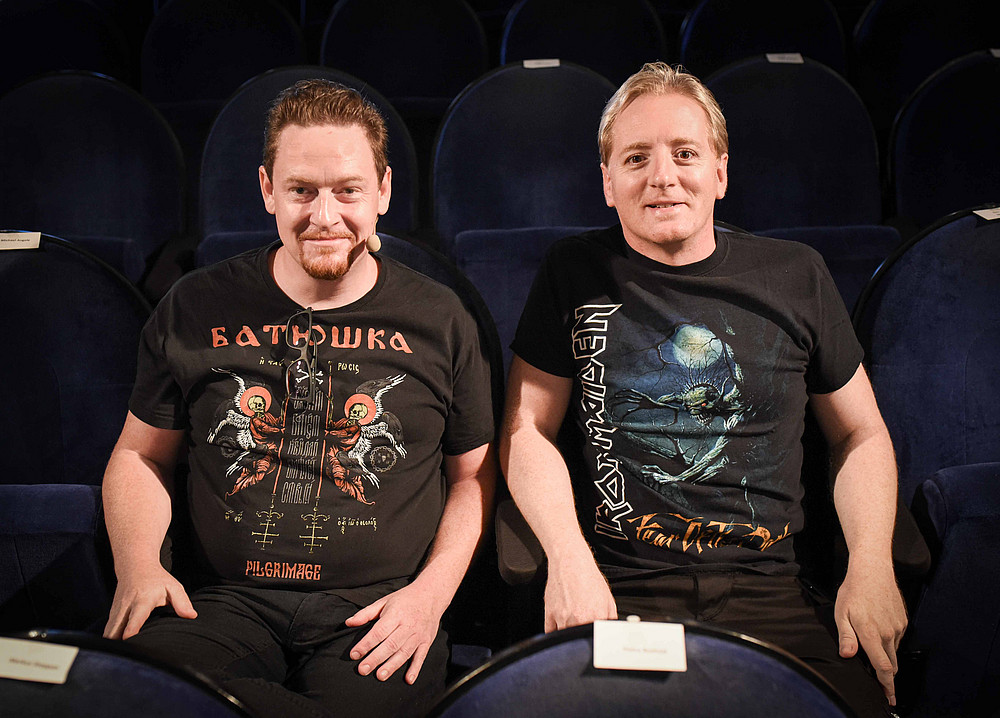
Peter Pichler (links) war diesmal zu Gast bei Fritz Treiber im Science & Cinema. Gesprächsstoff hatten die beiden Metal-Fans ausreichend, sie brachten mit Charme und Witz dem Publikum die Geschichte der Schwermetall-Musik näher. Foto: Uni Graz/Tzivanopoulos

Peter Pichler (links) war diesmal zu Gast bei Fritz Treiber im Science & Cinema. Gesprächsstoff hatten die beiden Metal-Fans ausreichend, sie brachten mit Charme und Witz dem Publikum die Geschichte der Schwermetall-Musik näher. Foto: Uni Graz/Tzivanopoulos

Religion trifft auf Rebellion: Science & Cinema entführte in die wilde Welt der Heavy Metal-Musik

666 is the Number of the Beast: Mit dem Refrain des gleichnamigen Liedes und Albums setzte die britische Heavy Metal-Band Iron Maiden 1982 einen Meilenstein. Die Bedeutung der Zahl Sechshundertsechsundsechzig ist für Metal-Fans bildhaft – in der biblischen Auslegung der Offenbarung des Johannes wird sie mit der Zahl des Tieres und des Antichristen, sprich des Teufels, interpretiert. „Der Antichrist als Gegenspieler Jesu Christi ist ein zentrales Motiv in unterschiedlichen Ausprägungen der Musikrichtung. Von Thrash bis Black Metal“, weiß Peter Pichler. „Rebellion gegen die Religion sozusagen.“ Der Historiker und Kulturwissenschafter war am 15. September zu Gast beim Uni-Graz-Format Science & Cinema. Gemeinsam mit Moderator und Metalhead Fritz Treiber analysierte Pichler im Filmzentrum Rechbauer Filmausschnitte aus bekannten und weniger bekannten Heavy Metal-Streifen und Dokumentationen. Dabei wurden auch die Ursprünge dieser Musikrichtung definiert: „Sie finden sich im Blues, bei Johann Sebastian Bach, aber auch in den großen Konzertwerken von Richard Wagner wieder“, weiß Pichler. Black Sabbath war, sind sich die Experten einig, wohl die erste Band, die „teuflische“ Riffs auf der Gitarre umsetzten, das Fundament legten und so als Begründer des Metals gelten.
 

Schwermetall ist zweifelsohne seit Jahrzehnten sowohl eine der stabilsten und homogensten als auch eine der am wenigsten beachteten kulturellen Formationen. Generationen von Menschen aller Altersgruppen folgen der Musik, verehren ihre Idole von Black Sabbath, Dio, Motörhead, Metallica, Megadeath, Judas Priest oder Iron Maiden. Jüngst beschäftigt sich auch die Wissenschaft mit dem Thema. Dazu arbeitet auch Pichler im FwF-Projekt „Breaking the Law...?! Normenbezogenes klangliches Wissen in der Heavy-Metal-Kultur. Graz und die Steiermark, 1980 bis zur Gegenwart“. Er durchleuchtet die historische Rolle von Vorstellungen von Recht- und Rechtsbruch sowie der Einstellung in dieser Subkultur zu (Rechts-)Normen.
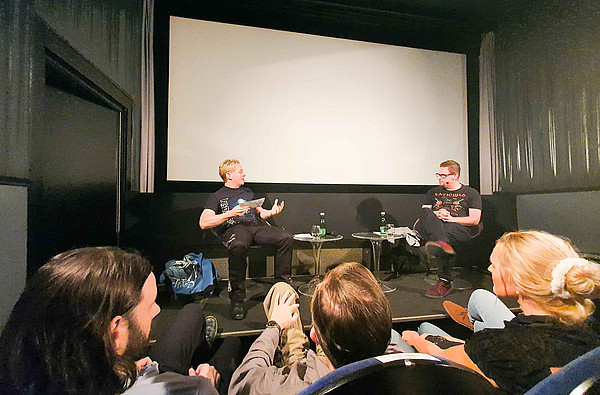
Voller Saal im Rechbauerkino. Foto: Uni Graz/Tzivanopoulos
created by Konstantin Tzivanopoulos

Related news

Happy holidays and a wonderful New Year!

The 7th Faculty wishes you a Merry Christmas and a happy New Year. Here you will find an overview of the holiday opening hours of our Hands-on Labs and the university museums.

Extern Intern

From Dinosaurs to Democracy: Reading and Discussion at the Literaturhaus

On Tuesday evening, the Literaturhaus Graz hosted a reading and discussion of the book The Beauty and Elegance of the Austrian Federal Constitution. A Literary Commentary. The venue was filled to capacity, every seat taken, with an attentive and open atmosphere throughout the evening.

“Chemical Life”: University of Graz Christmas Chemistry Show Captivates Audience

Festive spirit met scientific fascination as this year’s edition of the Christmas chemistry show “Chemical Life” transformed the stage of the Schauspielhaus into a lively laboratory. School classes and numerous other guests enjoyed an evening of surprising experiments and vivid insights into the chemistry of everyday life.

Schüler:innen zwischen 10 und 14 Jahren Studierende/Student:innen Wissenschaftskommunikation

Science goes Social II: Recap of a successful workshop series

The lunchtime workshop series “Science goes Social II” brought together three different perspectives on science communication this year. From personal branding to social media strategies, researchers gained valuable insights into how they can make their work and their institutions more visible on social media. The series will continue in 2026.

Wissenschaftler:innen Digitales (Social Media) Workshops Wissenschaftskommunikation

Begin of page section:
Additional information:

University of Graz
Universitaetsplatz 3
8010 Graz
Austria
  • Contact
  • Web Editors
  • Moodle
  • UNIGRAZonline
  • Imprint
  • Data Protection Declaration
  • Accessibility Declaration
Weatherstation
Uni Graz

End of this page section. Go to overview of page sections

End of this page section. Go to overview of page sections

Begin of page section:

End of this page section. Go to overview of page sections