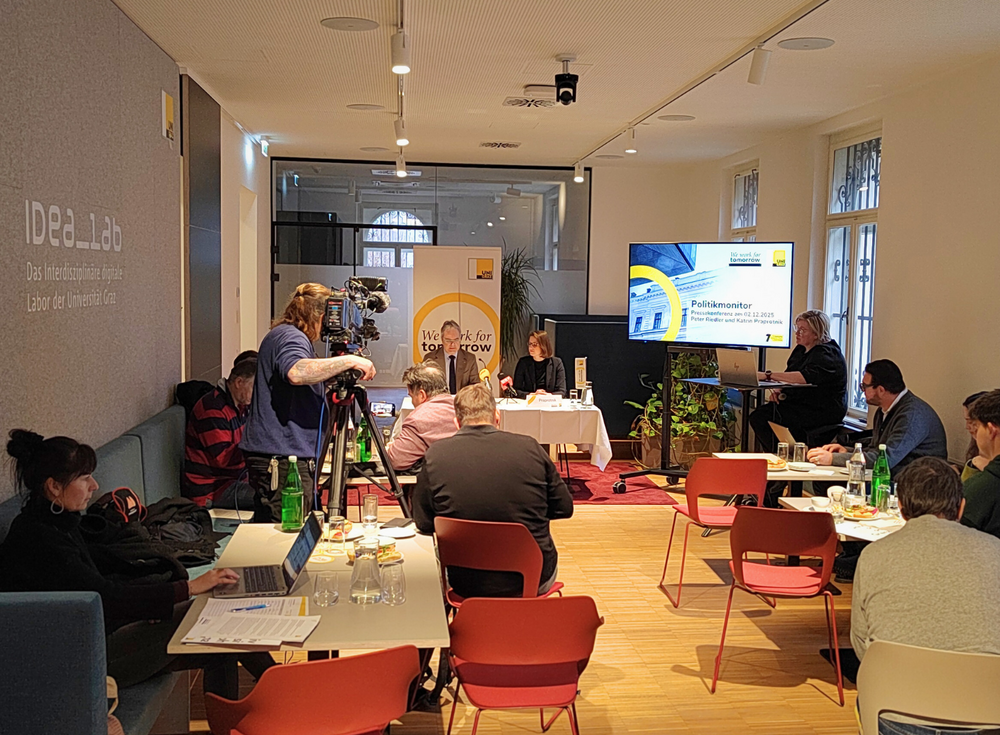
Around 14 months after the 2024 Austrian legislative election, Katrin Praprotnik’s research team has released updated figures on a total of 1,674 campaign pledges. According to the data, 19 per cent are considered fulfilled – 14 per cent fully and 5 per cent partially. The results indicate that while initial measures have been implemented, a significant majority of planned initiatives remain outstanding.
Clear differences emerge between the coalition partners: the ÖVP, as the chancellor’s party, has fulfilled 25 per cent of its promises, the NEOS 17 per cent and the SPÖ 12 per cent.
In terms of content, the picture is mixed. While areas such as infrastructure and European policy show noticeable progress, social policy remains far behind expectations. Individual projects – such as the introduction of partial retirement or key reform initiatives outlined in the parties’ election programmes – underscore how differently the coalition partners prioritise their agendas and how quickly they pursue them.
Rector Peter Riedler emphasised the importance of continuous academic monitoring, which helps make political processes more transparent and provides orientation in an increasingly complex environment. The current findings further strengthen the University of Graz’s role as an independent observer of governmental activity.
The complete data and analyses are available at www.politikmonitor.at.