Begin of page section:
Page sections:

  • Go to contents (Accesskey 1)
  • Go to position marker (Accesskey 2)
  • Go to main navigation (Accesskey 3)
  • Go to sub navigation (Accesskey 4)
  • Go to additional information (Accesskey 5)
  • Go to page settings (user/language) (Accesskey 8)
  • Go to search (Accesskey 9)

End of this page section. Go to overview of page sections

Begin of page section:
Page settings:

English en
Deutsch de
Search
Login

End of this page section. Go to overview of page sections

Begin of page section:
Search:

Search for details about Uni Graz
Close

End of this page section. Go to overview of page sections


Search

Begin of page section:
Main navigation:

Page navigation:

  • University

    University
    • About the University
    • Organisation
    • Faculties
    • Library
    • Working at University of Graz
    • Campus
    Developing solutions for the world of tomorrow - that is our mission. Our students and our researchers take on the great challenges of society and carry the knowledge out.
  • Research Profile

    Research Profile
    • Our Expertise
    • Research Questions
    • Research Portal
    • Promoting Research
    • Research Transfer
    • Ethics in Research
    Scientific excellence and the courage to break new ground. Research at the University of Graz creates the foundations for making the future worth living.
  • Studies

    Studies
    • Prospective Students
    • Students
  • Community

    Community
    • International
    • Location
    • Research and Business
    • Alumni
    The University of Graz is a hub for international research and brings together scientists and business experts. Moreover, it fosters the exchange and cooperation in study and teaching.
  • Spotlight
Topics
  • Our digital Advent calendar
  • Sustainable University
  • Researchers answer
  • Work for us
Close menu

End of this page section. Go to overview of page sections

Begin of page section:
You are here:

University of Graz The 7th Faculty News YouTube-Labor
  • For scientists
  • For science enthusiasts
  • About the 7th Faculty
  • Accompanying research
  • Contact and team
  • News
  • Events

End of this page section. Go to overview of page sections

Tuesday, 05 May 2020

YouTube-Labor

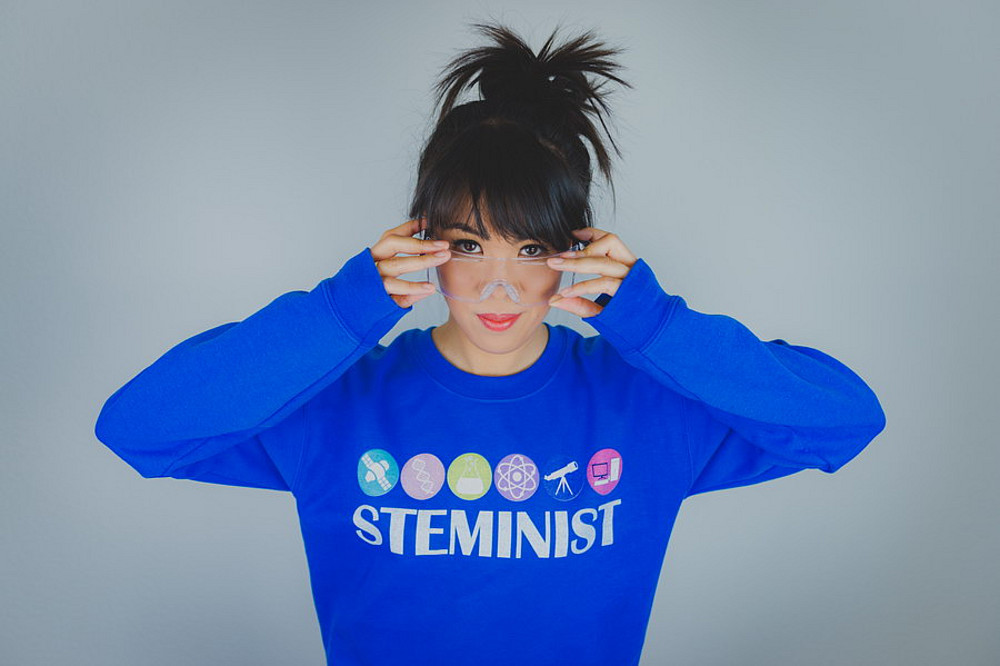
Die deutsche Chemikerin Mai Thi Nguyen-Kim hat als Wissenschaftsjournalistin und Edutainerin eine große Fangemeinde im Netz. Foto: Viet Nguyen-Kim

Die deutsche Chemikerin Mai Thi Nguyen-Kim hat als Wissenschaftsjournalistin und Edutainerin eine große Fangemeinde im Netz. Foto: Viet Nguyen-Kim

Heinz Oberhummer Award für Wissenschaftskommunikation 2020 geht an Mai Thi Nguyen-Kim

Sie moderiert das Fernsehmagazin „Quarks“ des WDR und produziert für „funk“, das junge Angebot von ARD und ZDF, den preisgekrönten YouTube-Kanal „maiLab“. Dort verzeichnen ihre Updates in der aktuellen Coronakrise regelmäßig Millionen Zugriffe. Spannend und zugleich humorvoll vermittelt die deutsche Chemikerin Mai Thi Nguyen-Kim selbst komplizierte wissenschaftliche Sachverhalte und erreicht damit nicht nur die junge Generation. Dafür wurde sie nun mit dem Heinz Oberhummer Award für Wissenschaftskommunikation 2020 ausgezeichnet. Der mit 20.000 Euro und einem Glas Alpakakot dotierte Preis wird seit 2016 von den Science Busters gemeinsam mit der Universität Graz, der Technischen Universität Wien, dem Wissenschaftsministerium, ORF Fernsehen, Radio FM4 und der Stadt Wien für hervorragende Wissenschaftsvermittlung vergeben.

Mai Thi Nguyen-Kim, Kind vietnamesischer Eltern, ist nicht nur selbst Chemikerin, sondern auch Tochter, Schwester und Frau eines Chemikers. Nach ihrer Ausbildung, unter anderem an der Rheinisch-Westfälischen Technische Hochschule (RWTH) Aachen, am MIT – Massachusetts Institute of Technology und in Harvard, tauschte sie das Labor jedoch weitgehend mit der Bühne für Wissenschaftskommunikation. Sie ist auch Autorin des Bestsellers „Komisch, alles chemisch!“ und Dozentin am Nationalen Institut für Wissenschaftskommunikation. Der Heinz Oberhummer Award ist nicht ihre erste Auszeichnung. Sie wurde unter anderem mit dem Grimme Online Award und dem Georg von Holtzbrinck Preis für Wissenschaftsjournalismus prämiert sowie 2018 zur Wissenschaftsjournalistin des Jahres gewählt.

Heinz Oberhummer (1941–2015) war Absolvent der Universität Graz und Professor für Theoretische Physik am Atominstitut der Technischen Universität Wien. Als Gründungsmitglied der Science Busters bewies er im Radio, im Fernsehen, in sozialen Netzwerken, in Büchern und auf der Bühne, dass WissenschafterInnen Forschung auch unterhaltsam vermitteln können.
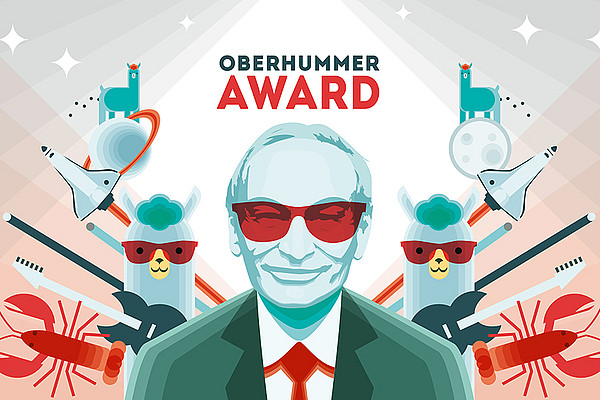
Heinz Oberhummer, Absolvent der Universität Graz, war Physiker, Lehrer, Aufklärer, Autor populärwissenschaftlicher Bücher, Kabarettist und Science Buster. Grafik: Büro Alba
created by Gudrun Pichler

Related news

Happy holidays and a wonderful New Year!

The 7th Faculty wishes you a Merry Christmas and a happy New Year. Here you will find an overview of the holiday opening hours of our Hands-on Labs and the university museums.

Extern Intern

From Dinosaurs to Democracy: Reading and Discussion at the Literaturhaus

On Tuesday evening, the Literaturhaus Graz hosted a reading and discussion of the book The Beauty and Elegance of the Austrian Federal Constitution. A Literary Commentary. The venue was filled to capacity, every seat taken, with an attentive and open atmosphere throughout the evening.

“Chemical Life”: University of Graz Christmas Chemistry Show Captivates Audience

Festive spirit met scientific fascination as this year’s edition of the Christmas chemistry show “Chemical Life” transformed the stage of the Schauspielhaus into a lively laboratory. School classes and numerous other guests enjoyed an evening of surprising experiments and vivid insights into the chemistry of everyday life.

Schüler:innen zwischen 10 und 14 Jahren Studierende/Student:innen Wissenschaftskommunikation

Science goes Social II: Recap of a successful workshop series

The lunchtime workshop series “Science goes Social II” brought together three different perspectives on science communication this year. From personal branding to social media strategies, researchers gained valuable insights into how they can make their work and their institutions more visible on social media. The series will continue in 2026.

Wissenschaftler:innen Digitales (Social Media) Workshops Wissenschaftskommunikation

Begin of page section:
Additional information:

University of Graz
Universitaetsplatz 3
8010 Graz
Austria
  • Contact
  • Web Editors
  • Moodle
  • UNIGRAZonline
  • Imprint
  • Data Protection Declaration
  • Accessibility Declaration
Weatherstation
Uni Graz

End of this page section. Go to overview of page sections

End of this page section. Go to overview of page sections

Begin of page section:

End of this page section. Go to overview of page sections